Complete all 6 sections to master how plants convert light to energy!
⏱ Time spent:0:00
Take your time — no rush! Suggested ~35 minutes
0 of 6 sections complete
📚 Section 1: Vocabulary Matching⏱ ~5 min
Match each photosynthesis term with its correct definition. Click a term, then click its matching definition.
Chloroplast
Organelle where photosynthesis occurs; has thylakoids and stroma
Thylakoid
Disc-shaped membrane sacs inside the chloroplast where light reactions happen
Stroma
Fluid-filled space surrounding the thylakoids where the Calvin cycle occurs
Photosystem
Cluster of pigments and proteins that captures light energy
RuBisCO
Enzyme that fixes CO₂ in the first step of the Calvin cycle
Carbon Fixation
Process of incorporating CO₂ into organic molecules
Photoautotroph
Organism that makes its own food using light energy
NADPH
Electron carrier produced by light reactions; powers the Calvin cycle
🔬 Section 2: Key Figures⏱ ~5 min
Study these key OpenStax figures. Click each image to reveal its description. Try to explain each diagram before looking!
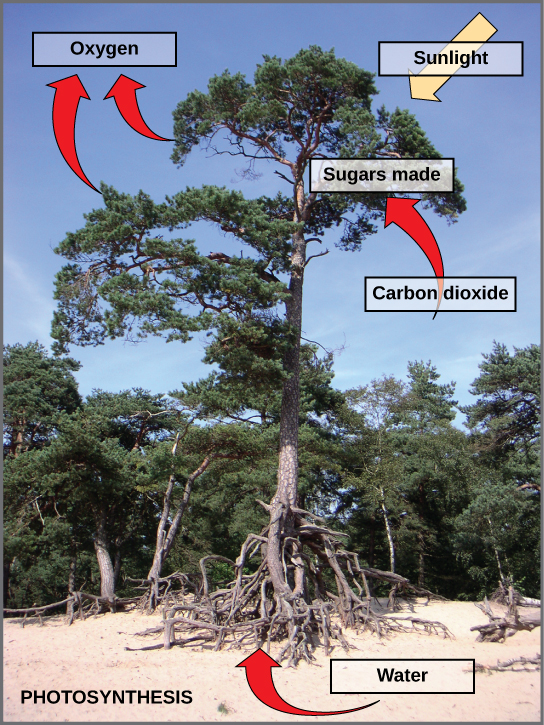
Figure 8.4Photosynthesis uses solar energy, carbon dioxide, and water to produce energy-storing carbohydrates. Oxygen is generated as a waste product. The overall equation: 6CO₂ + 6H₂O → C₆H₁₂O₆ + 6O₂
🔍 Click to reveal description
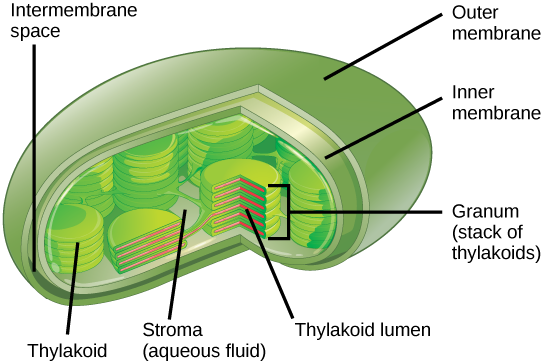
Figure 8.6Chloroplast structure: Has an outer membrane and inner membrane. Inside are stacks of thylakoids (called grana) surrounded by the fluid stroma. Light reactions occur in thylakoid membranes; the Calvin cycle occurs in the stroma.
🔍 Click to reveal description
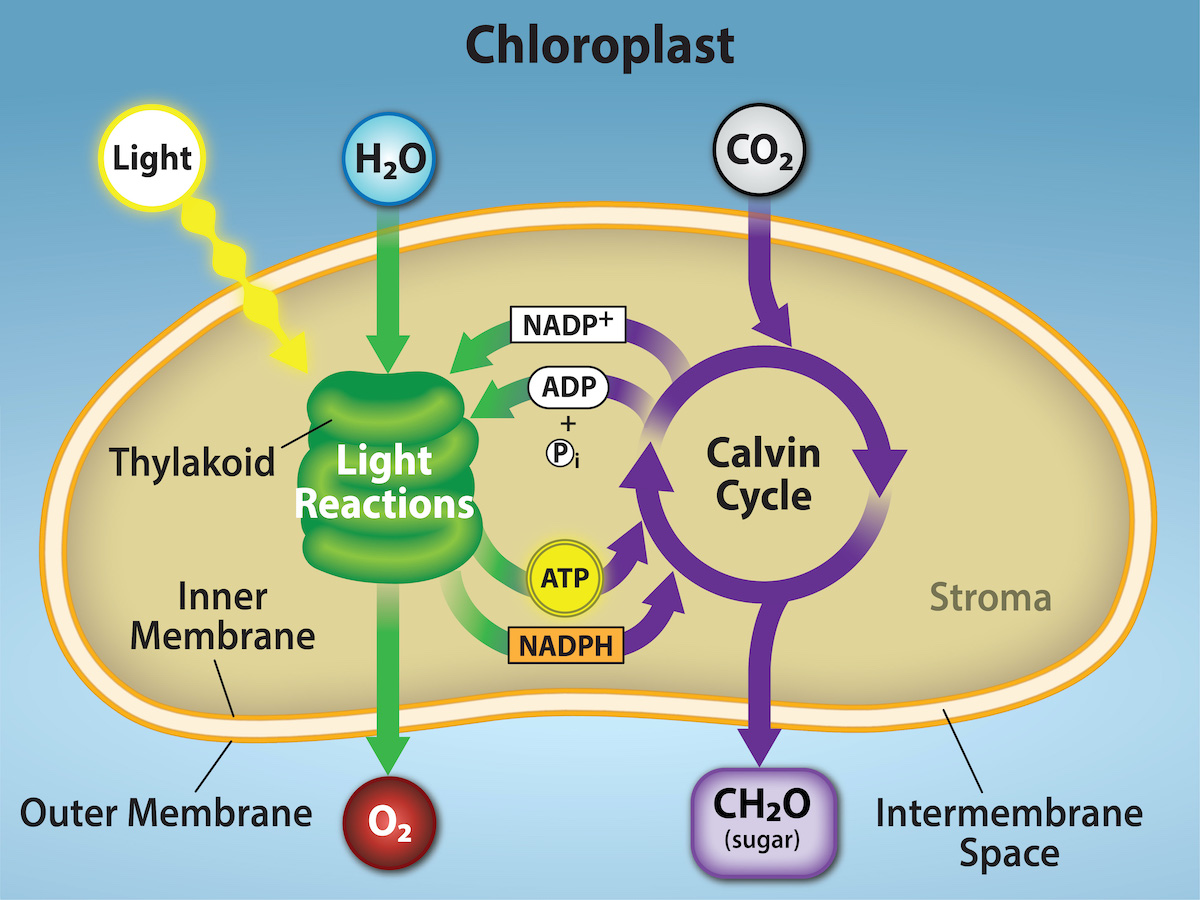
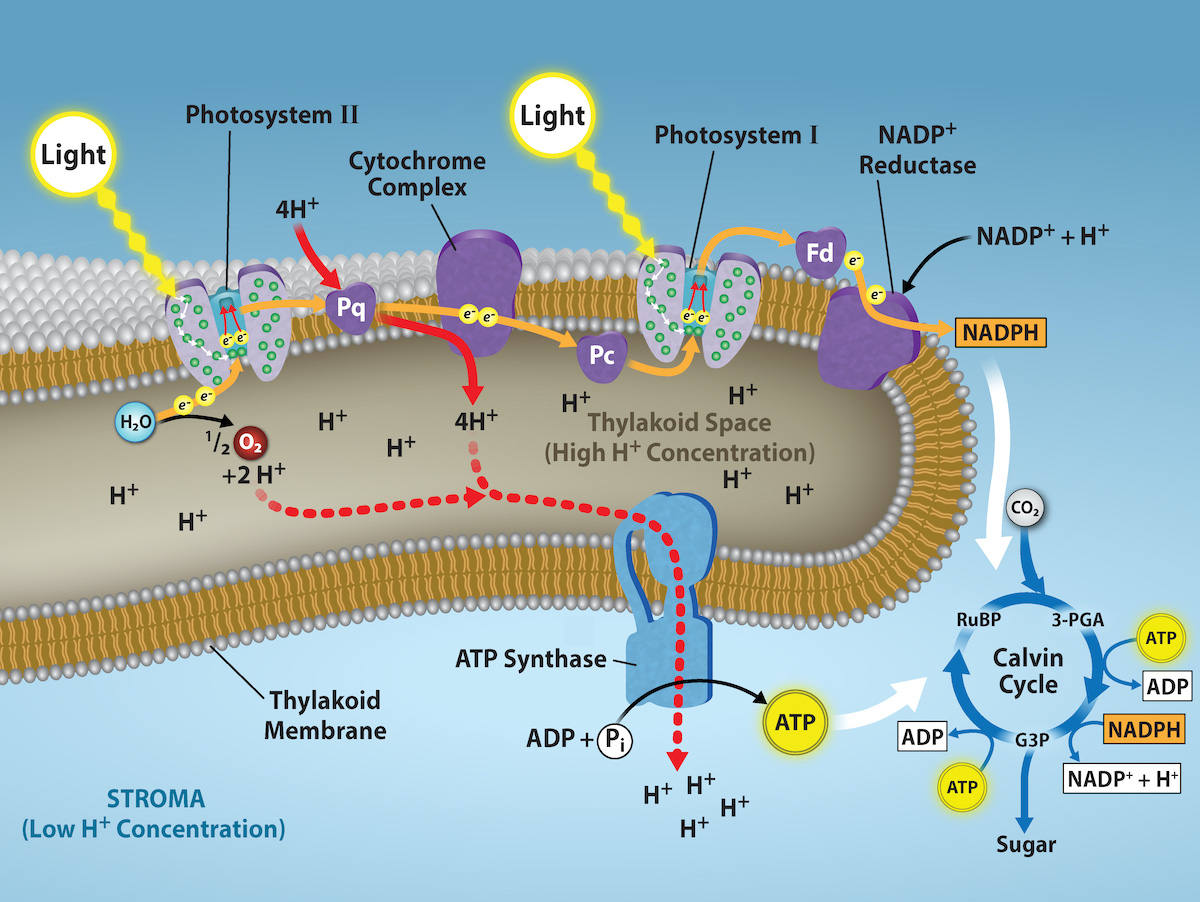
Figure 8.7Two stages of photosynthesis: (1) Light-dependent reactions in the thylakoid membrane produce ATP and NADPH using sunlight and water. (2) The Calvin cycle in the stroma uses ATP and NADPH to fix CO₂ into G3P (a sugar precursor).
🔍 Click to reveal description
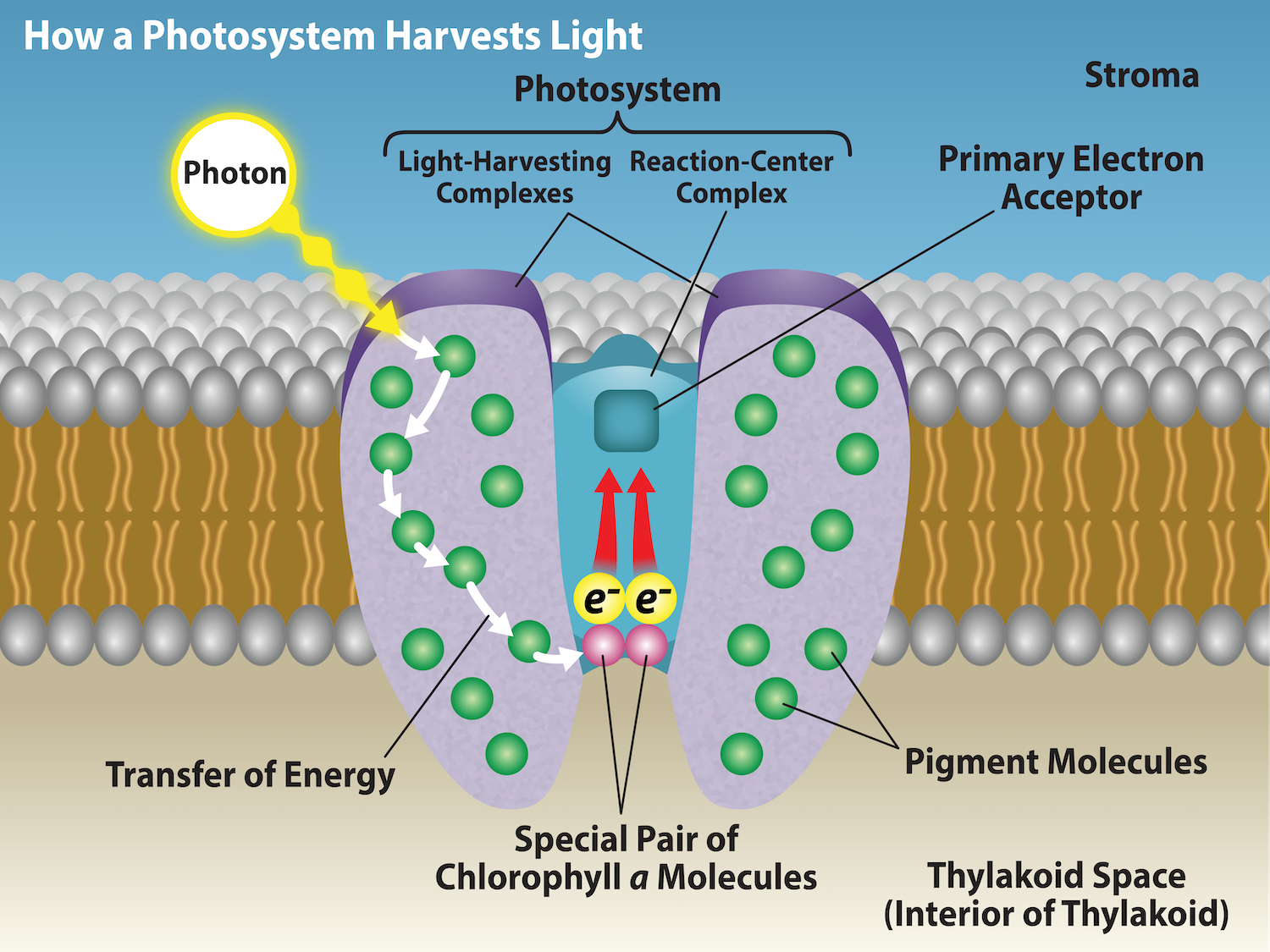
Figure 8.16A photosystem consists of a light-harvesting complex and a reaction center. Pigments in the antenna complex absorb light and transfer energy to the reaction center chlorophyll, which releases an excited electron to the electron transport chain.
🔍 Click to reveal description
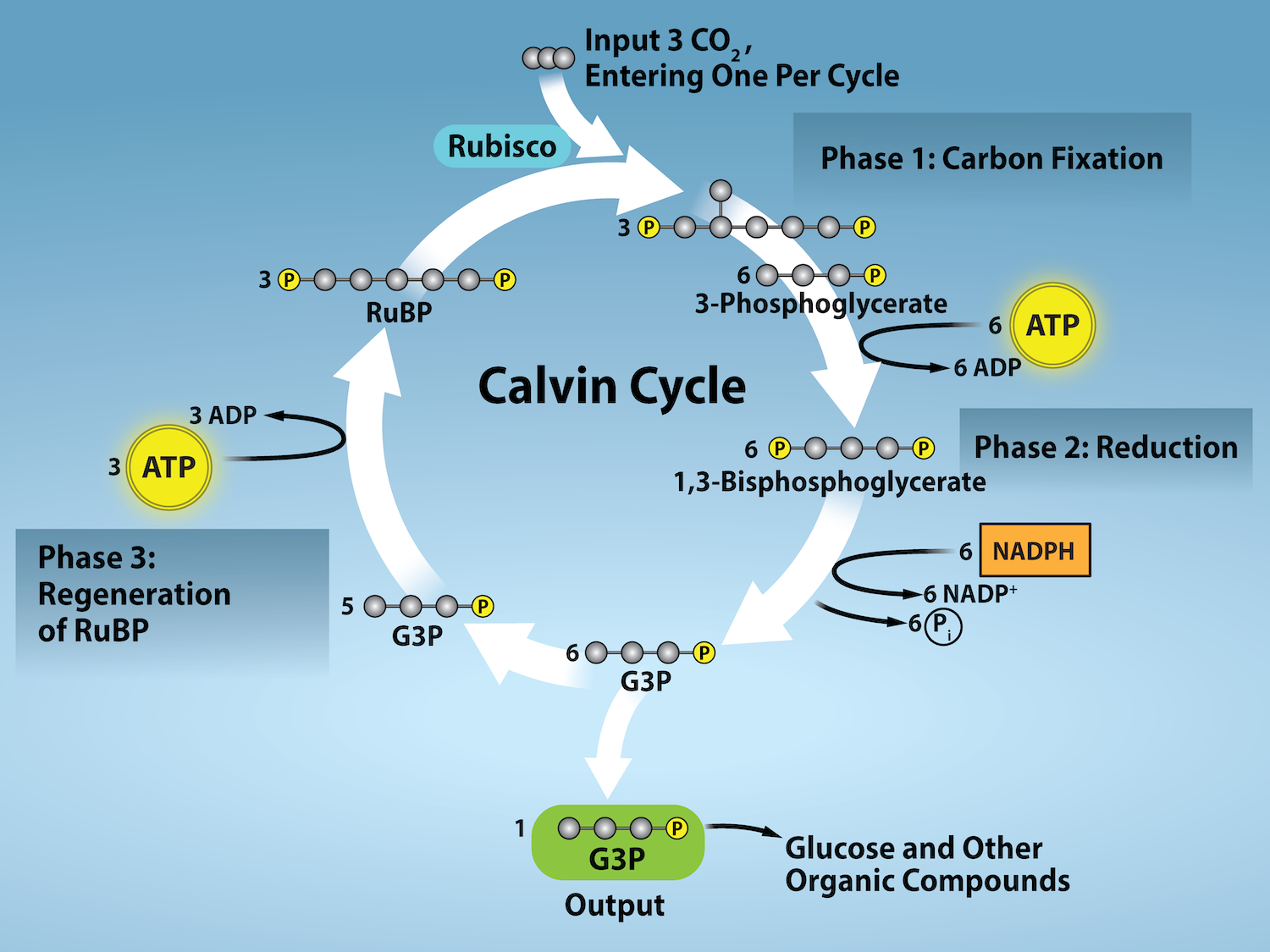
Figure 8.19The Calvin cycle has three stages: (1) Carbon fixation — RuBisCO attaches CO₂ to RuBP to form 3-PGA. (2) Reduction — ATP and NADPH convert 3-PGA to G3P. (3) Regeneration — Some G3P regenerates RuBP to continue the cycle. For every 3 CO₂ fixed, 1 net G3P is produced.
🔍 Click to reveal description
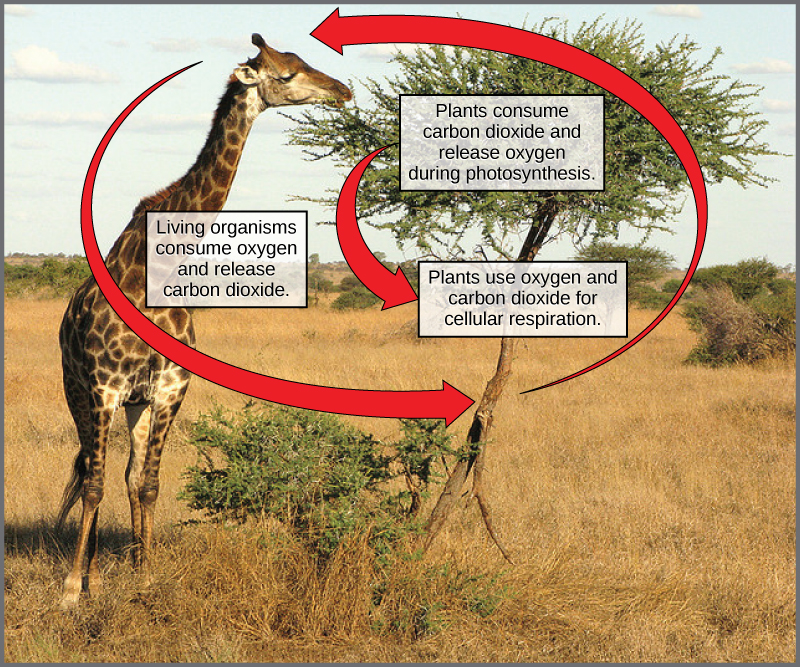
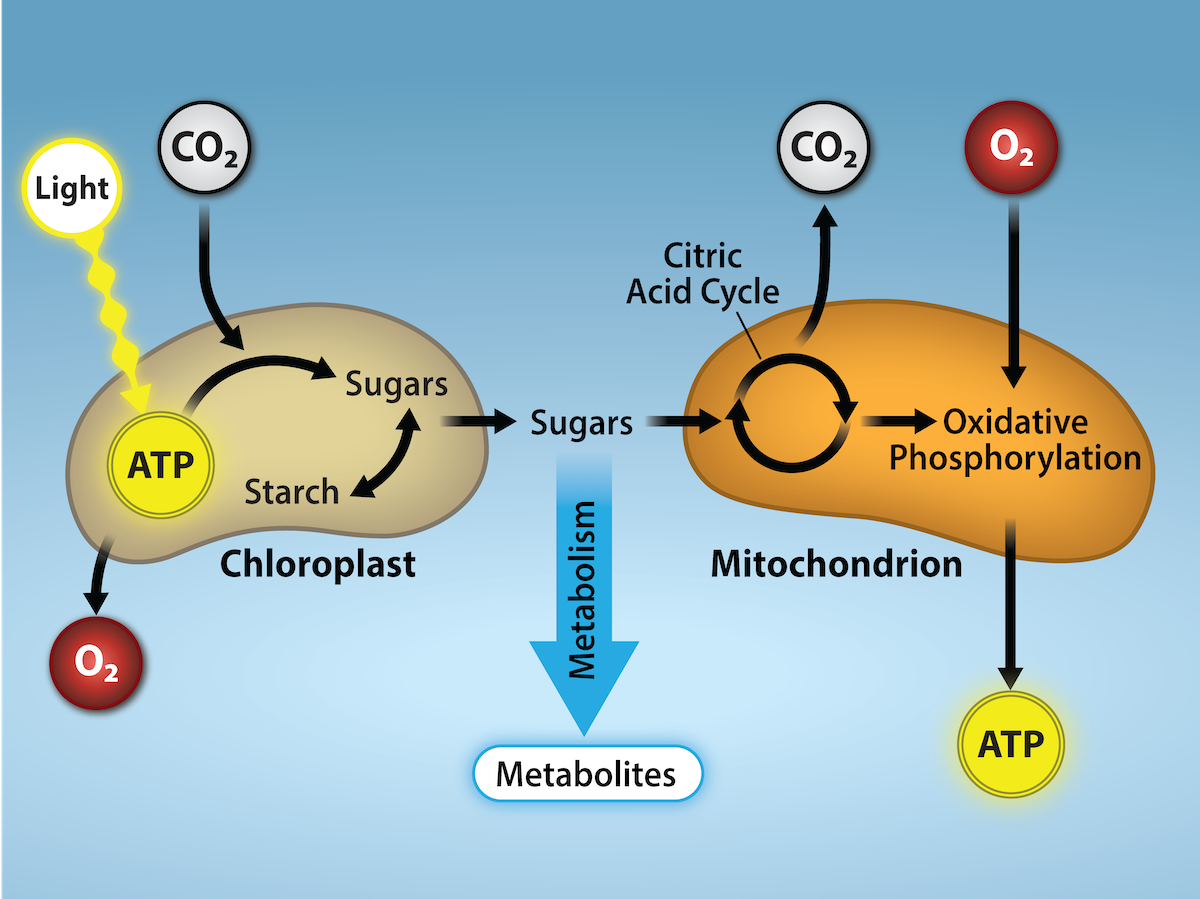
Figure 8.22Photosynthesis and respiration are complementary: Photosynthesis consumes CO₂ and produces O₂. Aerobic respiration consumes O₂ and produces CO₂. Together they form a cycle that sustains life on Earth.
🔍 Click to reveal description
🔄 Section 3: Compare the Two Stages⏱ ~5 min
Complete the comparison table by dragging features to the correct column.
Feature
Light Reactions
Calvin Cycle
Location:
Needs sunlight?
Main input:
Main output:
Drag these features to the correct column:
Thylakoid membrane
Stroma
Yes, directly
No (uses ATP/NADPH)
H₂O (water)
CO₂ (carbon dioxide)
ATP & NADPH
G3P (sugar precursor)
✅ Section 4: Concept Check⏱ ~8 min
Answer these questions to test your understanding. Use the hint buttons if needed!
Before answering, rate your confidence on photosynthesis:
1. Where do the light-dependent reactions of photosynthesis take place?
In the stroma of the chloroplast
In the cytoplasm of the cell
In the thylakoid membranes of the chloroplast
In the outer membrane of the mitochondria
Look at the chloroplast diagram — where are the photosystems embedded?
Why this is correct: Light-dependent reactions occur in the thylakoid membranes, where photosystems I and II are embedded. These membrane-bound protein complexes capture light energy and use it to split water, generate ATP (via chemiosmosis), and produce NADPH. The stroma is where the Calvin cycle happens instead.
2. What is the role of chlorophyll in photosynthesis?
It stores glucose produced by the Calvin cycle
It absorbs light energy, primarily in the blue and red wavelengths
It splits water molecules to release oxygen
It directly fixes carbon dioxide into sugars
Why do plants appear green? Think about which wavelengths of light are NOT absorbed.
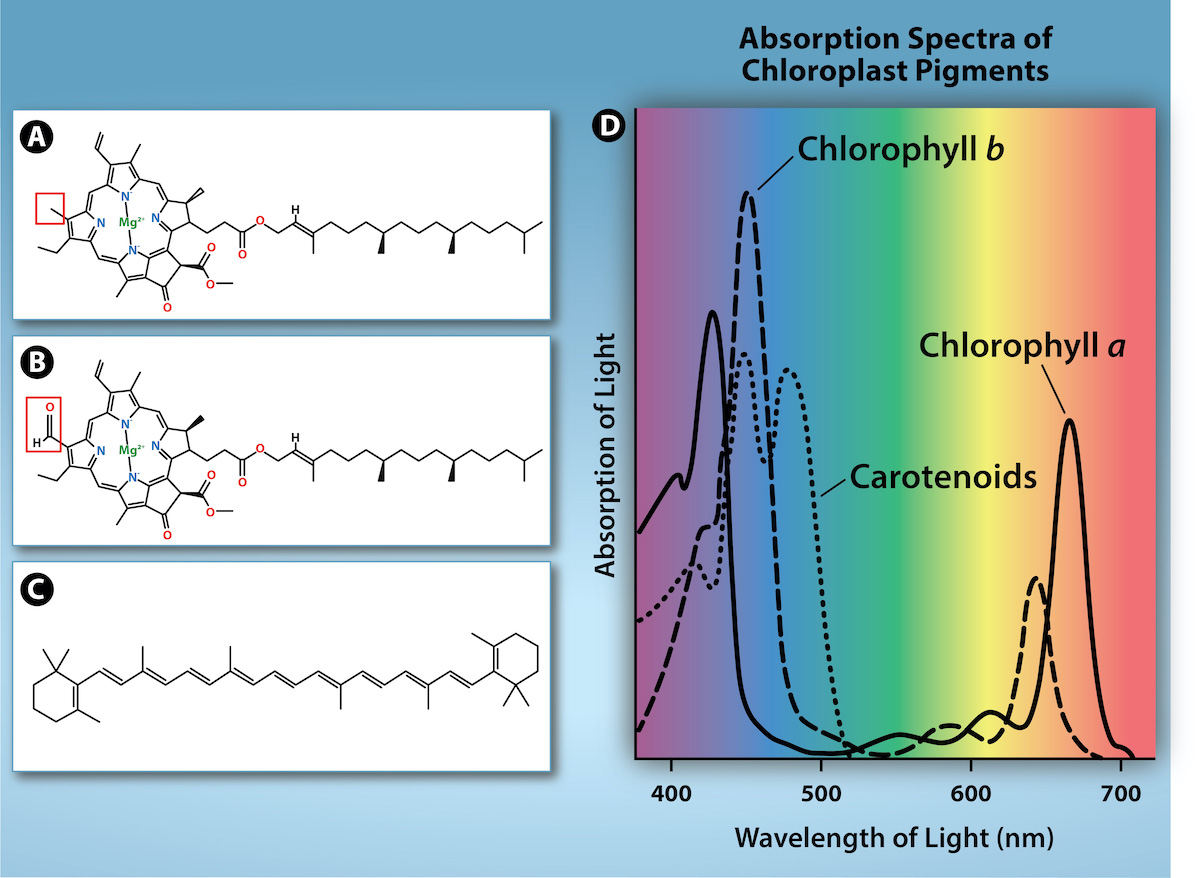
Why this is correct: Chlorophyll a and b absorb light most strongly in the blue-violet (~430 nm) and red (~660 nm) wavelengths, reflecting green light — which is why plants appear green. This absorbed energy excites electrons that drive the light reactions. Accessory pigments like β-carotene expand the range of wavelengths that can be captured.
3. In the Calvin cycle, what does the enzyme RuBisCO do?
Splits water molecules to produce O₂
Transports electrons through the thylakoid membrane
Converts ADP to ATP using a proton gradient
Catalyzes carbon fixation by attaching CO₂ to RuBP
RuBisCO stands for Ribulose-1,5-bisphosphate carboxylase/oxygenase. "Carboxylase" means it adds a carboxyl group (CO₂)...
Why this is correct: RuBisCO (the most abundant enzyme on Earth!) catalyzes the first step of the Calvin cycle — carbon fixation. It attaches CO₂ to the 5-carbon sugar RuBP (ribulose bisphosphate) to form two molecules of 3-PGA (3-phosphoglycerate). This is how inorganic carbon enters the organic world!
4. What are the products of the light-dependent reactions that are used by the Calvin cycle?
ATP and NADPH
Glucose and oxygen
CO₂ and water
G3P and RuBP
The light reactions produce energy carriers. What "charged batteries" does the Calvin cycle need to power carbon fixation?
Why this is correct: The light-dependent reactions produce ATP (energy currency) and NADPH (electron carrier) by using light energy to split water and drive electron transport. These two molecules then power the Calvin cycle's reduction phase, where 3-PGA is converted to G3P. Oxygen is also released, but it's a byproduct, not used by the Calvin cycle.
5. How do C4 plants like corn and CAM plants like cacti adapt to hot, dry environments?
They don't perform photosynthesis in hot conditions
They use a completely different light-absorbing pigment
They minimize photorespiration by separating CO₂ fixation in space or time
They absorb CO₂ through their roots instead of stomata
C4 plants fix CO₂ in different cells (spatial separation). CAM plants fix CO₂ at night (temporal separation). Both strategies avoid...
Why this is correct: In hot, dry conditions, stomata close to conserve water, causing O₂ to build up. This leads to photorespiration (RuBisCO grabs O₂ instead of CO₂, wasting energy). C4 plants fix CO₂ first in mesophyll cells using PEP carboxylase, then shuttle it to bundle-sheath cells for the Calvin cycle. CAM plants open stomata only at night to capture CO₂, then use it during the day. Both strategies minimize wasteful photorespiration.
💡 Section 5: Apply Your Knowledge⏱ ~5 min
Answer these short response questions. Type your answers below (minimum 30 characters each).
Question 1
Look at this figure showing the relationship between photosynthesis and cellular respiration. Explain why these two processes are considered complementary.
0 / 500
Question 2
A scientist discovers a plant that has very high levels of β-carotene (an orange accessory pigment) but low levels of chlorophyll. Would this plant likely be found in a sunny or shady environment? Explain your reasoning.
0 / 500
🎯 Section 6: Final Reflection⏱ ~2 min
Write a brief reflection: Why is photosynthesis arguably the most important chemical reaction on Earth? Consider both energy and atmosphere. (Minimum 100 characters)
0 / 1000
🌿
Study Guide Complete!
Excellent work! You've mastered the fundamentals of photosynthesis.